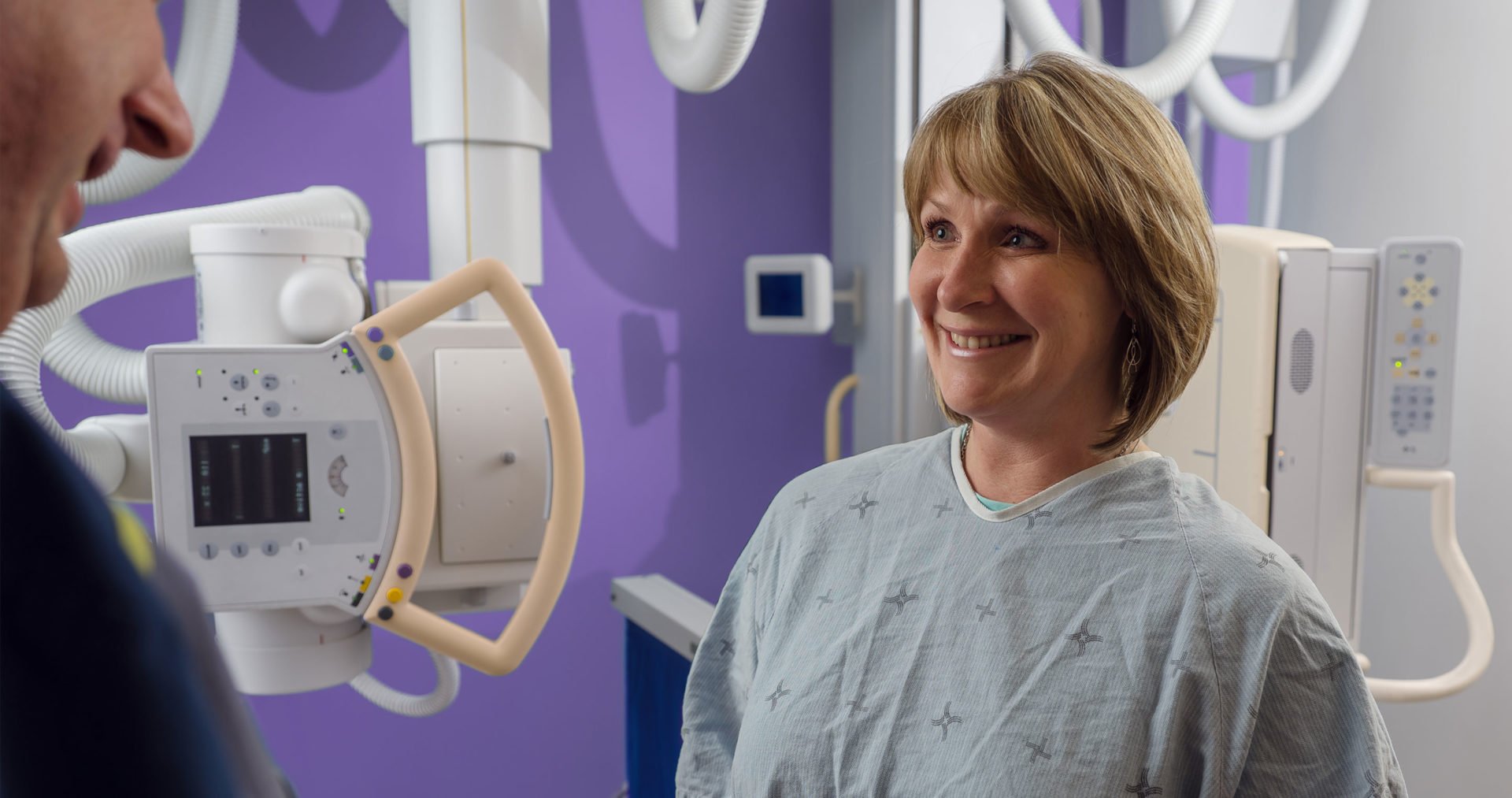
Outpatient Clinic
The outpatient clinic is readily available for those who require pre or post treatments.
Overview
The Outpatient Clinic is located on Mississaga Street, with convenient drop off and parking.Our team of Nurses works with Surgeons, Internists, Anesthetists and General Practitioners.
All appointments are pre-booked by your specialist or your family physician. Our clerk will ask for your health card and photo identification (if your health card does not have your picture) and verify that your address, phone number, and emergency contact person etc. are all up to date.
Hours of Operation
| Monday | 6:30am – 2:30pm |
| Tuesday | 6:30am – 2:30pm |
| Wednesday | 7:30am – 3:30pm |
| Thursday | 6:30am – 2:30pm |
| Friday | 6:30am – 2:30pm |
Outpatient Department and Specialty Clinics
The Outpatient Department provides coordinated, patient‑centered care for individuals requiring a wide
range of minor surgical and diagnostic services. Located at the Mississauga Street entrance, the
department offers convenient drop‑off access and supports timely, streamlined specialty care for the
community. Our interprofessional team collaborates closely with Surgeons, Internists, Anesthetists,
Ophthalmologists, Otolaryngologists (ENT), General Practitioners, RPNs, central registration, and
additional specialists to support safe, efficient, and high‑quality patient care.
Fracture Clinic
Operating weekdays, the Fracture Clinic is staffed by five orthopedic surgeons to offer comprehensive
paediatric and adult fracture management. Assessment, imaging, casting and cast removal, and
follow‑up care are facilitated in this busy clinic.
Fracture Screening and Prevention Program
The Ministry of Health’s Ontario Osteoporosis Strategy’s Fracture Screening and Prevention Program (FSPP) is offered at OSMH. The FSPP improves the care of people over the age of 50 who have had a fragility fracture to reduce their risk of having another broken bone. A broken bone caused by a slip, trip or a fall from standing height or less is also called a fragility fracture. A fragility fracture can be a warning sign that your bones have become weaker, possibly due to osteoporosis. To reach the Fracture Prevention Coordinator, please call extension 3701. Learn more: Fracture Screening and Prevention Program Video
Ophthalmology Clinic
Specialized outpatient medical and minor surgical eye care, including laser treatments, fluorescein
angiography and treatment for Macular Degeneration are offered.
Ear, Nose and Throat (ENT)
Provides diagnostic and minor procedural ENT services such as nasal and laryngeal scopes, skin cancer
excision, tracheostomy care, and minor procedures performed under local anesthetic.
Plastics Clinic
The Plastics Clinic facilitates outpatient procedures that do not require general anesthesia, such as skin
cancer excision and minor skin grafting procedures.
Internal Medicine Procedure Clinic
Specialist‑directed diagnostic and therapeutic interventions, such as bone marrow biopsies, lumbar
punctures, paracentesis, and thoracentesis.
General Surgery Clinic
This clinic facilitates minor procedures performed under local anesthetic, such as carpal tunnel release,
skin cancer removal, and lipoma excision.
Urology Clinic
The Urology Clinic provides comprehensive outpatient urological care, performing vasectomies, stent
removals, interstitial cystitis management and other minor urological procedures.
Anesthesia Procedural Clinic
Focused on chronic pain management and advanced injection therapies, this clinic performs epidural
injections and ultrasound‑guided pain procedures.
Gynecology Clinic
This clinic facilitates routine and minor gynecological services such as cancer screening, LEEP procedures
and minor biopsies.
Hand Clinic
Provides specialized, multidisciplinary care designed to diagnose, treat, and rehabilitate injuries and
conditions affecting the hand, wrist, and forearm. The program combines surgical care,
physical/occupational therapy, and custom splinting to improve patient function, plastic surgery
consultation and follow‑up, casting and splinting, and integrated care with on‑site Occupational
Therapists.
Outpatient Transfusion Clinic
For patients requiring transfusions of blood products, therapeutic infusions, or intravenous (IV) specialized medications located on H2/oncology floor.
Thoracic Clinic
This is the follow-up clinic for post Thoracic surgery patients.
Pre-operative Anesthetic Clinic (PAC)
Providing assessment and education to patients and families either in person or by phone located on first floor in Surgical Services.
Family Practice Procedure Clinics
The Family Practice Procedure clinic provides space and resources for outpatient procedures delivered
under local anesthetic, including minor surgical procedures, biopsies and lesion removal.
Outpatient Rehabilitation Services
The Outpatient Rehabilitation Services at Soldiers’ Memorial Hospital is an outpatient program designed
for adults requiring ongoing multi-service rehabilitation, community re-integration and functional
independence enhancement. Our therapy covers: hand therapy, neurology and stroke, and orthopaedics
such as joint and amputee rehabilitation.
A multidisciplinary team of healthcare professionals work together to maximize our patients’ abilities. A
wide variety of services are offered to people requiring at least two of the following services:
occupational therapy, physiotherapy, speech-language pathology, and total joint rehabilitation. The
service operates on an inpatient and outpatient basis and requires a physician referral.
Musculoskeletal Rapid Access Clinics
Access to OSMH Musculoskeletal (MSK) Rapid Access Clinics (RACs)
Access is obtained by Primary care provider sending referral form through Regional Central intake process. Patients will then be contacted within 2-4 weeks of receiving referral to set up an appointment time (appointment set up may vary based on volume of referrals). There are additional RAC clinic locations within the North Simcoe Muskoka LHIN and extending beyond. Care access and alignment will be coordinated with the patient.
What is the Musculoskeletal (MSK) Rapid Access Clinic (RAC)
Patients who have Moderate/Severe Hip or Knee Osteoarthritis are assessed by an Advanced Practice provider. During their assessment mobility, swelling, pain, range of motion and strength are reviewed. Individual treatment plans are then determined and may consist of conservative management, self-management, surgical referral and/or referral to exercise programs.
Osteoarthritis Guide for Patients
For surgical patients undergoing hip/knee arthroscopy or joint replacements: OSMH Hip and Knee Replacement School
Regional Coordinated Access for Musculoskeletal (MSK) Rapid Access Clinics (RACs)
Regional Coordinated Access for hip and knee care in Ontario refers to a system of Musculoskeletal (MSK) Rapid Access Clinics (RACs). This provincial initiative aims to provide timely, high-quality, and integrated care for patients experiencing hip and knee osteoarthritis.
How the Regional Coordinated Program Works:
The coordinated access model is designed to streamline patient journeys and reduce wait times for assessment and potential surgery.
- Referral Process: Patients must obtain a referral from their primary care provider (family doctor or nurse practitioner). This referral is sent to a regional central intake program, which coordinates the patient’s care pathway.
- Centralized Intake: The central intake system directs the referral to the appropriate Rapid Access Clinic, often the one closest to the patient’s home, or based on the patient’s choice of hospital or surgeon.
- Assessment by Advanced Practitioner: Within 4 weeks of receiving the referral the patient is contacted for an appointment at the RAC by a specially-trained Advanced Practice Provider (APP). **Wait times may vary per RAC clinic.
- Individualized Care Plan: Based on the assessment, the APP determines the most appropriate care plan.
- Surgical Candidates: If surgery is necessary, the patient is referred to an orthopedic surgeon for a consultation. This model has proven to reduce wait times for both the initial assessment and surgery.
- Non-Surgical Candidates: Patients who do not require surgery are provided with an evidence-based self-management plan, education, and referrals to local non-surgical services like physiotherapy.
Key Benefits
- Timely Access: Patients receive assessments and treatment recommendations faster than traditional models.
- Coordinated Care: The central intake and triage process ensures a seamless journey through the healthcare system.
- Right Care, Right Time: The model ensures patients are directed to the most appropriate treatment option, whether surgical or non-surgical, based on a comprehensive assessment.
Additional information/Other links:
Provider Information and Intake Form
Provider referral considerations for patients experiencing mild Osteoarthritis:
- Physiotherapy and/or similar exercise-based programs
- GLAD OA program – managing hip and knee Osteoarthritis -gladcanada.ca
- The Arthritis Society (Arthritis Rehabilitation and education Program (AREP) Arthritis Society Canada
- Referrals to sports medicine physicians, physiatrists, pain specialists, interventional radiology programs
Musculoskeletal Central Intake Form
OSMH Rapid Access Clinic
Patients are required to complete the following forms at their initial Rapid Access Clinic (RAC) appointment. If the paperwork has not been completed prior to arriving at the Outpatient Department, patients will be provided with the required forms to complete upon arrival.
Musculoskeletal Rapid Access Clinic Patient History
Musculoskeletal Rapid Access Clinic Patient Questionnaire
** RAC access and clinic appointments will be based on patients who have positive imaging for moderate/severe hip or knee osteoarthritis